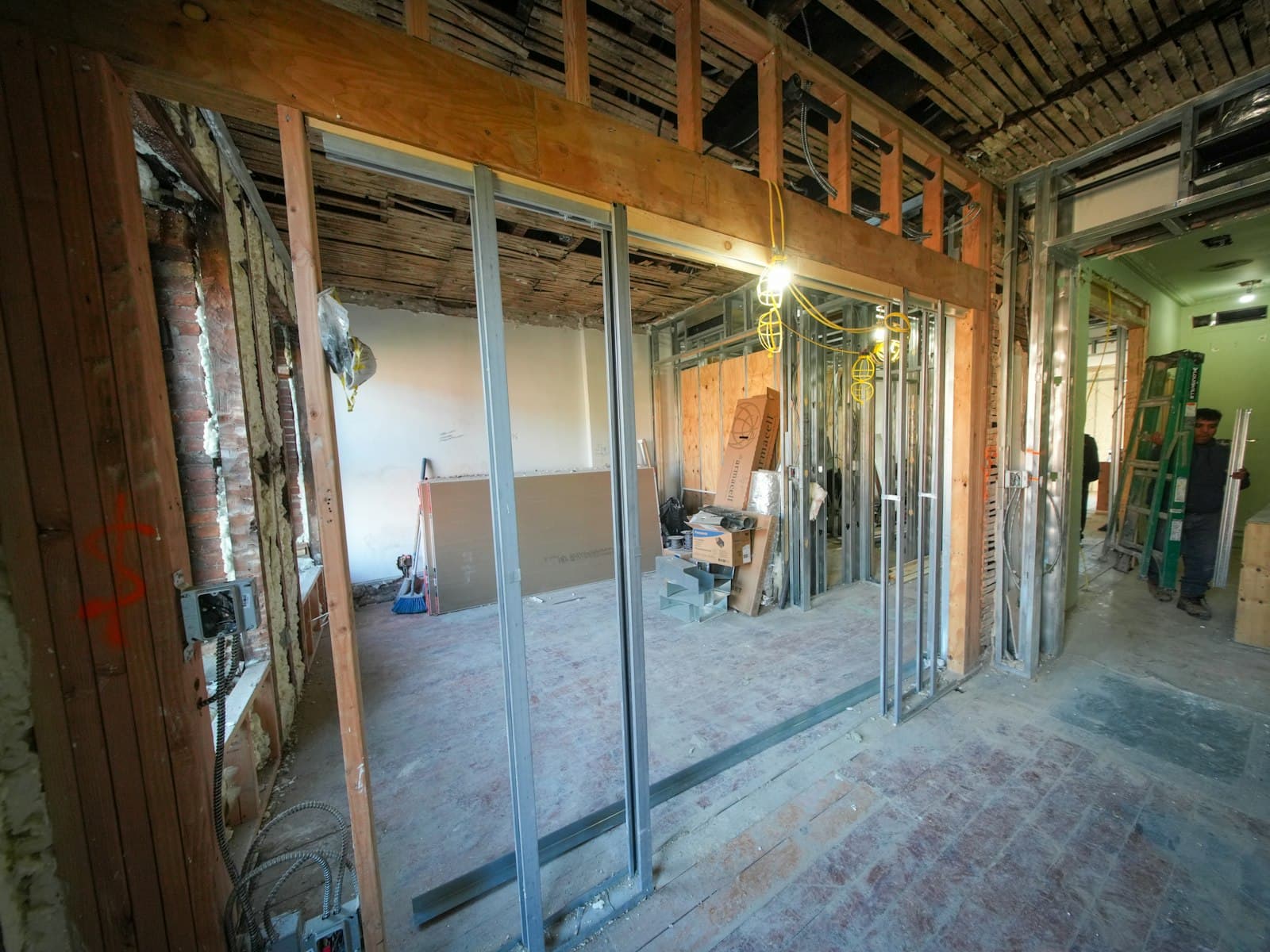
Adding a family room in Braintree, opening up a kitchen in Weymouth, or taking on a whole-house remodel in Hingham means putting a lot of money and trust into one person's hands. The South Shore skews toward additions and full remodels in commuter towns, and those projects carry wrinkles you will not hit with a simple bathroom refresh: coastal building rules near the water, septic capacity tied to bedroom counts, and a licensing system that trips up plenty of homeowners.
This guide walks through what a general contractor should cost, which credentials your project actually requires, what Massachusetts law says about deposits and contracts, and the warning signs that separate a legitimate builder from someone who will leave you worse off. Everything here is grounded in the official state registries and consumer-protection rules, so you can verify each point yourself.
What General Contractors Charge for Additions and Remodels
Most GCs price work one of two ways, and the difference matters for your budget.
- Fixed bid (lump sum): You agree on a single price for a defined scope. The contractor absorbs overruns but also keeps savings, so bids often build in a cushion. Best when the plans are complete and you want cost certainty.
- Cost-plus: You pay actual material and labor costs plus an agreed markup or fee. This can be cheaper on well-managed jobs but exposes you to overruns, so it needs tight documentation and a clear fee structure.
General contractor markup on the trades and materials they coordinate typically runs in the mid-teens to low-twenties as a percentage, though it varies by builder, complexity, and how much subcontracting is involved. On the South Shore, additions and whole-house remodels sit at the higher end of complexity because they touch structure, mechanicals, and often permitting hurdles.
Rather than trust a single quote, compare local pricing. Tavlee publishes a live general contractor cost calculator for the metro area, and you can browse verified GC listings for the South Shore where HIC registrations and licenses are checked against the state registries. Use those as a sanity check against the bids in front of you.
Get at least three itemized bids. A one-line "$180,000 for the addition" tells you nothing. You want line items for demolition, framing, mechanicals, finishes, and permits so you can compare apples to apples and spot who left something out.
HIC Registration vs. CSL: Which Your Project Needs
This is the single most misunderstood part of hiring a contractor in Massachusetts, and getting it wrong costs homeowners real protection. There are two separate credentials, and they do different jobs.
Home Improvement Contractor (HIC) registration
HIC is a consumer-protection registration run by the Office of Consumer Affairs and Business Regulation under MGL c.142A. Most residential general contractors doing remodeling and additions must be HIC-registered. Registration is what gives you access to the written-contract requirements, deposit limits, and the Guaranty Fund that can reimburse homeowners in certain disputes.
Verify HIC status through the Office of Consumer Affairs and Business Regulation, which runs the HIC lookup and the Guaranty Fund.
Construction Supervisor License (CSL)
The CSL is a competency license issued under the state building code, and it is required for structural work. When your addition involves load-bearing changes, new framing, or anything touching the building's structure, the person pulling the permit generally needs a CSL.
HIC is a consumer-protection registration; CSL is a competency license. They are not interchangeable, and a legitimate builder on an addition usually carries both.
The trades are separate
Plumbing and electrical portions of your project cannot be covered by a GC's HIC or CSL. Those must go to separately licensed trades:
- Plumbing and gas fitting are licensed through the Board of State Examiners of Plumbers and Gas Fitters, with gas fitting a distinct credential from plumbing.
- Electrical work must be done by a state-licensed electrician through the Board of State Examiners of Electricians.
Before you sign anything, run every name through the state's check-a-professional-license tool. The Division of Occupational Licensure houses these boards and offers public lookup.
Contracts, Deposits, and Payment Schedules Under MA Law
Massachusetts home-improvement law is unusually protective, but only if you use it. The rules under MGL c.142A require a written, signed contract before work starts on most residential projects.
Key provisions to insist on:
- A signed contract before any work or deposit. No handshakes. The contract should name the parties, describe the scope, and list the total price.
- A capped deposit. Massachusetts law limits the up-front deposit to no more than one-third of the total contract price, except where the contractor must special-order materials.
- A payment schedule tied to progress. Payments should track milestones, not the calendar. Never pay ahead of completed, inspected work.
- Permits pulled by the contractor. On a legitimate job, the contractor pulls the building permit under their own license through your town's building department. If a contractor asks you to pull the permit yourself, treat it as a warning sign — it can shift liability onto you and often signals a licensing problem.
The permit paper trail protects you, because inspections verify the work meets code.
Coastal and Floodplain Rules Near the Shore
Proximity to the water changes the rules. Additions in shoreline sections of Quincy, Weymouth, Hingham, and Plymouth can fall within mapped floodplains or coastal zones, which trigger stricter building standards.
What that can mean for your project:
- Elevation and construction requirements for structures in flood-prone zones, which affect foundations, utilities, and finished-floor heights.
- Additional local review before a building permit issues, adding time and design cost.
- Insurance implications that flow from a property's flood-zone designation.
Because these rules add engineering and permitting work, they push both the timeline and the budget on coastal additions. Ask any GC bidding a shoreline project how they have handled floodplain review before, and confirm the design professional and permit-puller understand the applicable standards. Federal flood-mapping guidance from FEMA is the reference point local officials work from.
Title 5 Septic: Why an Extra Bedroom Matters
Here is a trap specific to towns without full sewer service, including parts of Plymouth and Hingham: Massachusetts Title 5 ties septic system capacity to the number of bedrooms in a home.
That connection catches homeowners off guard. Adding a bedroom, or converting space in a way the code reads as a bedroom, increases the design flow your septic system must handle. If the existing system was sized for the current bedroom count, an addition can trigger a required Title 5 inspection and, in some cases, a system upgrade or full replacement.
The practical takeaways:
- Confirm your septic capacity early, before you finalize a floor plan that adds bedrooms.
- Budget for the possibility of a septic upgrade, which can be a significant line item independent of the addition itself.
- Coordinate the timing so a required inspection does not stall your permit.
A GC experienced on the South Shore should raise this before you fall in love with a design. If yours does not, ask directly.
How to Vet and Compare Bids
A good comparison process filters out most bad actors before they ever touch your house.
- Verify credentials first. Confirm HIC registration through OCABR, confirm CSL where structural work is involved, and check each trade's license through the state registry. Skip anyone you cannot verify.
- Confirm insurance. Ask for proof of liability and workers' compensation coverage, and confirm it is current.
- Compare itemized bids, not totals. Line items expose scope gaps and unrealistic lowballs.
- Read reviews across sources. One glowing testimonial is not a pattern. Tavlee weighs reviews across multiple sources and checks registrations against the Massachusetts registries, which saves you cross-referencing by hand.
- Ask about permits and inspections. A contractor who plans to pull permits and schedule inspections is telling you they intend to build to code.
Red Flags That Should End the Conversation
Contractor fraud in Massachusetts is not hypothetical. In a case reported by Roofing Contractor in July 2026, a Monson homeowner was approached by a man claiming to be a mason who said his chimney was at risk of collapse and offered to start repairs immediately for $25,000. The homeowner said the man began work with a sledgehammer before a permit was pulled, and when the homeowner tried to stop it, the chimney was destroyed and recently installed siding and roofing were damaged. The siding crew that had just finished the original work recognized the scam pattern, urged the homeowner to call authorities, and the individuals were reportedly taken into custody.
The case is a clean illustration of the warning signs to memorize:
- Unsolicited arrival, often right after another crew has been on your property.
- Pressure for immediate payment or a signature on the spot.
- Work starting without a signed contract or before a permit is pulled.
- Refusal or inability to provide licensing and insurance.
- Urgent failure claims designed to rush your decision ("your chimney is about to collapse").
Any one of these should stop the conversation. As the state's own guidance makes clear, verify registration with the Office of Consumer Affairs and Business Regulation and never let work begin without a signed contract.
Takeaways and Next Steps
Hiring a general contractor on the South Shore comes down to verification and paperwork:
- Confirm HIC registration and, for structural work, a CSL, then verify every trade license through the state registry.
- Insist on a written contract and keep the deposit at or below the legal one-third cap.
- Check floodplain rules if you are near the shore and check Title 5 septic capacity before adding bedrooms.
- Compare itemized bids and read reviews across sources.
- Walk away from pressure tactics and unverifiable credentials.
Start by pulling up the verified South Shore GC listings and running the cost calculator so you know what a fair bid looks like before the first contractor rings your doorbell.