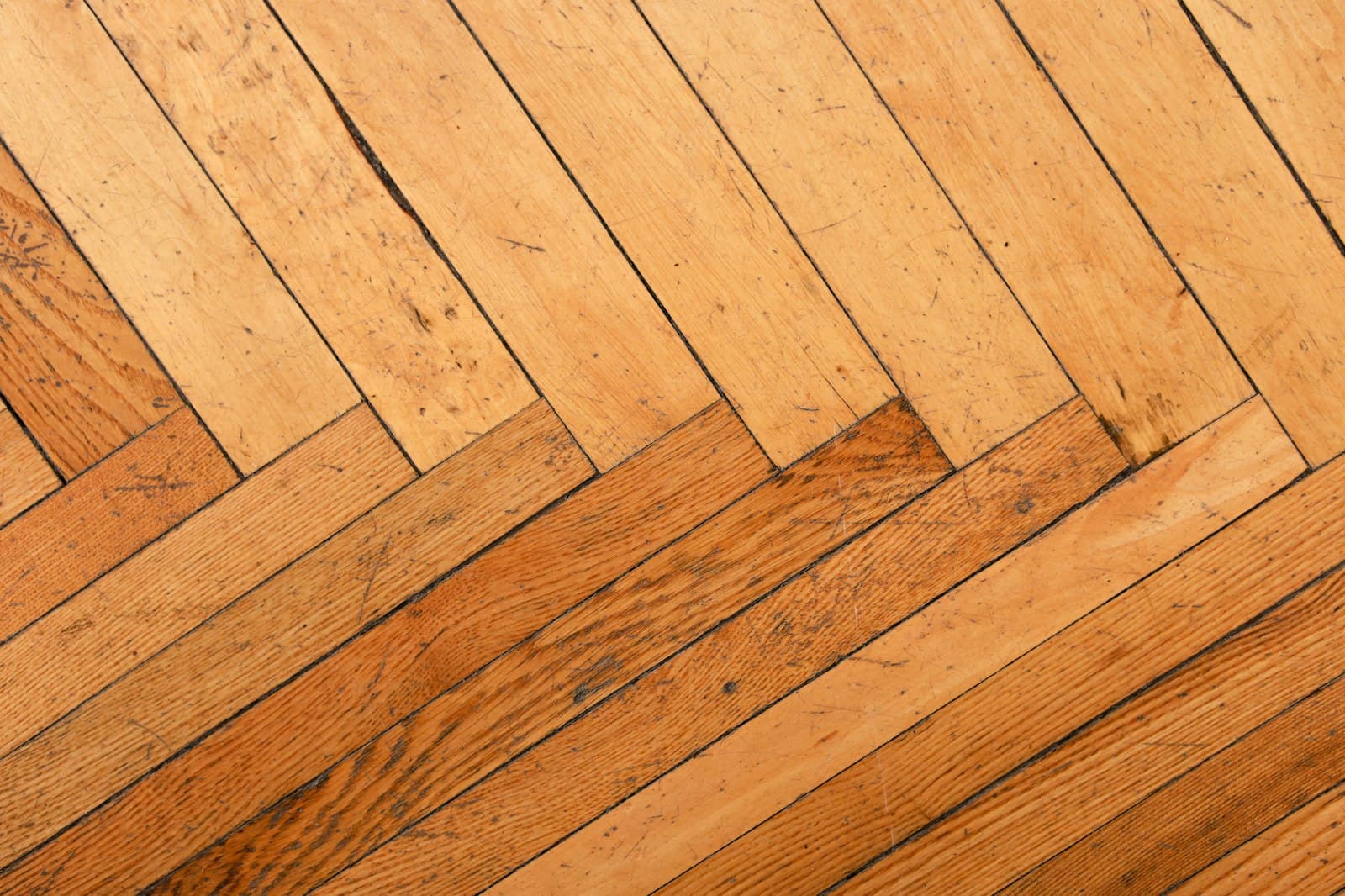
If your Quincy cape or Weymouth ranch still has carpet in the living room, there's a decent chance solid red-oak strip flooring is hiding underneath. Deciding whether to sand it back to life or cover it with something new is one of the most common questions South Shore homeowners face, and the answer changes how you hire, how you compare quotes, and how much you pay.
This guide walks through refinishing versus converting to luxury vinyl plank (LVP), below-grade choices for our coastal water tables, what Massachusetts actually licenses for flooring work, and the red flags worth watching before anyone touches your subfloor.
Refinishing vs. installation: what drives the cost
The biggest cost lever on a flooring job is whether you're reviving what's already there or starting over. On the South Shore, that distinction matters more than most homeowners expect, because so much of the postwar housing stock was built over solid oak.
Refinishing an existing floor generally means sanding, staining, and sealing wood you already own. There's no material to buy for the floor itself, no demolition, and no disposal of old carpet and pad beyond the initial teardown.
New installation adds material cost, underlayment or subfloor prep, delivery, and often more labor hours. Whether it's new hardwood or LVP, you're paying for the product and the crew time to lay it.
A few factors push either job up or down:
- Square footage and room layout. Open runs are faster to sand or lay than tight, cut-up rooms with closets and thresholds.
- Subfloor condition. Squeaks, soft spots, or uneven slabs mean prep work, and prep is where budgets quietly balloon.
- Stain and finish choices. Multiple coats, custom stains, and low-VOC finishes cost more than a standard clear polyurethane.
- Moisture and leveling. Below-grade or slab-on-grade rooms often need self-leveling compound and vapor mitigation.
Because prep varies so much house to house, ballpark ranges only get you so far. A live, local cost tool like the one at Tavlee's Boston flooring cost calculator is a better starting point than a national average, since it reflects area pricing.
Refinishing postwar oak strip floors vs. converting to LVP
Here's the pattern that repeats across the capes, ranches, and split-levels of Quincy, Braintree, Weymouth, Hingham, and Plymouth: builders in the postwar era laid solid red-oak strip flooring almost everywhere, then homeowners carpeted over it in later decades.
If that oak is intact, refinishing is usually the cheaper and smarter move, and it tends to help resale. Solid hardwood is a selling point in this market, and a professional sand-and-refinish restores a feature buyers actively look for. You're not adding material; you're uncovering an asset.
Solid oak can also be sanded multiple times over its life, so a refinish now doesn't foreclose future refreshes. That longevity is part of why it holds value.
LVP earns its place in specific rooms, not as a blanket replacement for good oak:
- Kitchens that see spills and heavy foot traffic
- Mudrooms and entries that take sand, salt, and wet boots all winter
- Family rooms where kids and pets are hard on finishes
LVP is waterproof, forgiving, and easy to maintain, which makes it a rational choice where hardwood would struggle. The mistake is ripping out sound oak strip floors in a bedroom or living room to install vinyl. In those rooms, you're often spending money to downgrade a feature buyers value.
A reasonable rule of thumb for South Shore homes: refinish the oak in the formal and sleeping spaces, convert the wet-and-messy rooms to LVP. You can browse verified South Shore flooring contractors on Tavlee to find crews that handle both.
Basements and below-grade floors: respect the moisture
Coastal water tables and humid New England summers make basement moisture a recurring problem on the South Shore, not a one-time fluke. Any flooring decision below grade has to account for it, or you'll be tearing it out in a few years.
Start with vapor testing on the slab. Concrete can look bone-dry and still push moisture vapor upward, which will destroy solid hardwood and can undermine adhesives. A contractor who wants to install directly over an untested slab is skipping the step that protects your investment.
For below-grade rooms, lean toward moisture-tolerant materials:
- LVP handles humidity and occasional dampness far better than solid wood.
- Tile over a properly prepped slab is durable and moisture-friendly.
- LVP or tile over a plywood or subfloor system can add a break between the slab and finished surface.
Solid oak strip flooring belongs above grade. If you love the look downstairs, LVP that mimics wood grain is the pragmatic answer. The goal below grade is a floor that shrugs off the moisture your slab will eventually see.
What Massachusetts does and doesn't license for flooring
This part surprises people: Massachusetts has no flooring-specific trade license. There's no state "floor installer" credential the way there is for plumbers and electricians.
The state does license the trades that often intersect with a renovation. The Division of Occupational Licensure houses the boards for plumbers and gas fitters, electricians, and others. Flooring itself isn't among them.
So how are flooring contractors regulated? Mostly through the Home Improvement Contractor (HIC) program, run by the Massachusetts Office of Consumer Affairs and Business Regulation under MGL c.142A. A few distinctions matter:
- Floor-covering-only work is often exempt from HIC registration. Purely laying carpet, LVP, or similar surface material can fall outside the HIC requirement.
- HIC registration comes into play when the job includes work like subfloor repairs, leveling, or other alterations to the structure. The Massachusetts home improvement law overview spells out registration, contract requirements, and deposit limits.
- Structural work or permits can trigger the need for a Construction Supervisor License and pulled permits, especially when subfloor or framing is involved.
If your project touches the subfloor, leveling, or anything structural, you want a registered HIC and, where required, permits. You can verify credentials directly through the state's check a professional license tool.
This is exactly the gap Tavlee is built to close for Boston-area homeowners. The directory verifies contractor credentials against official registries and weighs reviews across sources, so you're not left guessing whether a company's claims hold up.
How to vet and compare flooring quotes
Three quotes for the same room can differ by thousands of dollars, and the reason is almost always in the prep and the fine print. Compare the details, not just the bottom line.
- Moisture testing. Below grade or on a slab, ask whether they test vapor before installing. A quote that skips this is cheaper for a reason.
- Prep detail. Does the estimate spell out subfloor repair, leveling, and any squeak fixes? Vague "prep as needed" language is where change orders hide.
- Dust containment. Sanding oak creates fine dust throughout a house. Ask how they contain it, whether they use dustless systems, and how they protect adjacent rooms.
- Finish and product specifics. Number of coats, finish type, LVP wear-layer thickness. "Standard finish" tells you nothing.
- A signed, written contract. Massachusetts home-improvement law requires it for covered work, and it protects you regardless.
Get everything in writing and make sure each quote is scoping the same work. If one contractor plans to level a wavy floor and another plans to lay straight over it, they aren't comparable estimates.
Red flags worth walking away from
Contractor fraud is real in Massachusetts, and the warning signs are consistent. A recent case reported by Roofing Contractor shows how quickly it can go wrong. A Monson homeowner was approached by a man claiming to be a mason who said his chimney was at risk of collapse and offered to start immediately for $25,000. Demolition allegedly began before a permit was pulled, and by the time the homeowner tried to stop the work, the chimney was destroyed and the siding and roof were damaged. Most homeowners don't get a rescue after something like that. The tell-tale signs from that report apply directly to flooring:
- Unsolicited arrival, often right after another job wrapped up
- Pressure for immediate payment or a signature
- Work starting without a contract or before a permit is pulled
- Inability or refusal to provide licensing and insurance
- Urgent "it'll fail any minute" claims designed to rush you
The guidance is the same advice worth repeating for any trade: verify licensing or registration with the state, and never let work start without a signed contract.
Takeaways and next steps
Most South Shore flooring decisions come down to a few clear principles:
- Refinish the oak you already have in living and sleeping spaces; it's usually cheaper and better for resale than covering it.
- Reserve LVP for kitchens, mudrooms, and family rooms that take sand, salt, and moisture.
- Test the slab before any below-grade install, and choose moisture-tolerant materials down there.
- Know the licensing reality: no flooring-specific license, HIC registration when the job touches the subfloor or structure, and permits when required.
- Compare prep, not just price, and treat pressure tactics as your cue to walk away.
Start by verifying credentials and pulling comparable quotes. Browse verified South Shore flooring listings and run the numbers on the Boston-area cost calculator before you sign anything.