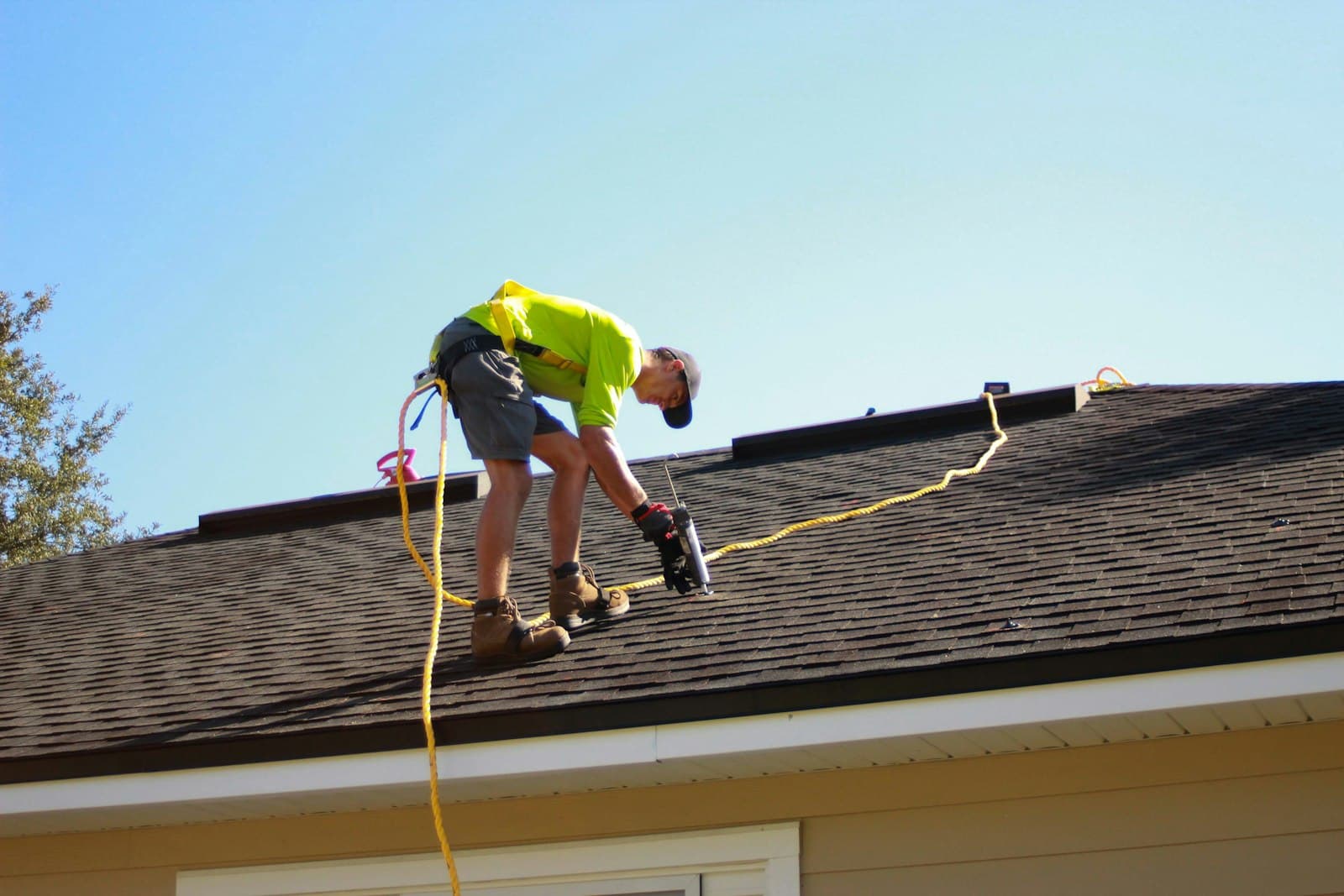
Boston's roofs take a beating. Between nor'easters, freeze-thaw ice dams, and the flat rubber roofs sitting on top of triple-deckers and rowhouses across Dorchester, Southie, and the South End, roofing is one of the most common - and most expensive - jobs a local homeowner will face. It is also one of the easiest to get wrong when hiring.
This guide walks through what a new roof and repairs actually cost in the Boston area, what Massachusetts law requires of the people doing the work, when you need a permit, how to compare quotes without getting fleeced, and how to spot the storm-chaser scams that follow every big weather event.
What roof replacement and repair cost in Greater Boston
Boston's housing stock shapes the price of everything. A huge share of the city's three-family and rowhouse buildings have flat or low-slope roofs, most commonly finished with EPDM rubber membrane. Pitched roofs on single-families and Victorians usually get asphalt shingles. The two systems price out differently, and the details of your building drive the final number more than any single sticker figure.
Because pricing swings so widely by property, the most useful tool is a localized estimate rather than a national average. Tavlee maintains a live Boston roofing cost calculator that reflects local labor and material realities.
Here is what actually moves the price:
- Material. EPDM rubber, TPO, and modified bitumen behave differently on flat roofs; asphalt shingle, metal, and slate cover the pitched-roof range. Slate and metal cost far more than asphalt.
- Pitch and complexity. Steeper roofs, dormers, valleys, skylights, and chimney flashing all add labor.
- Layers and tear-off. Stripping old material (a tear-off) costs more than laying new over the top (an overlay), but it is often the right call - more on that below.
- Access and staging. This is the Boston tax. On a narrow street with no driveway and cars parked bumper to bumper, staging materials and a dumpster is harder and pricier than in the suburbs. Some jobs need permits just to occupy the street.
- Ice-dam damage. Repeated freeze-thaw cycles push water under shingles and behind gutters. If ice dams have already caused rot at the eaves, expect deck repair on top of the roofing itself.
For repairs, the range runs from a quick flashing or membrane patch to significant work if water has gotten into the sheathing. Any roofer quoting a repair should tell you whether they are treating a symptom or fixing the cause.
Massachusetts licensing: HIC, CSL, and why it matters
This is the part homeowners skip and later regret. In Massachusetts, most residential roofing is regulated under the Home Improvement Contractor (HIC) program run by the Office of Consumer Affairs and Business Regulation (OCABR) under MGL c.142A.
What that law gives you as a homeowner:
- Contractors doing home-improvement work must be HIC-registered with OCABR. You can look up a registration through the Office of Consumer Affairs and Business Regulation before you sign anything.
- A written contract is required. Handshake deals leave you unprotected.
- Deposits are capped at one-third of the contract price, except when the contractor has to specially order materials.
- Registered contractors give you access to the Guaranty Fund, a route to recover losses when a registered contractor fails to perform.
The full statutory overview lives at the state's page on Massachusetts law about home improvement. Read the contract and deposit sections before your project starts.
HIC registration is not the same as a Construction Supervisor License. When roof work is structural - rebuilding rafters, altering the roof structure, or building a roof deck that changes the load path - a Construction Supervisor License (CSL) comes into play. A straightforward reroof may not require it; structural work does. Ask directly which applies to your job, and confirm the answer against your permit.
Verification is not optional. Massachusetts publishes a general how-to for checking a professional license, and the trade boards sit under the Division of Occupational Licensure. One efficient shortcut: Tavlee verifies contractor registrations against the Massachusetts registries and weighs reviews across sources, so you can start from a list of verified Boston roofers instead of a blind search.
Permits: roof decks, headhouses, and city inspections
Roofing that replaces like-for-like often does not need a building permit, but plenty of Boston roof projects do. The clearest examples are roof decks and the headhouses (the stair enclosures) that provide access to them. Those add structure, load, and egress considerations, and they require a building permit.
Permits and inspections in the city run through the Boston Inspectional Services Department, which handles building, plumbing, gas, and electrical permits and performs the inspections. A legitimate roofer or deck builder will pull the permit as part of the job. If a contractor tells you to skip the permit to save money or time, that is a warning sign, not a favor.
The permit protects you in a resale, too. Unpermitted structural work and roof decks routinely surface during a buyer's inspection and can blow up a sale.
How to compare roofing quotes without getting burned
Three quotes that all say "new roof" can describe completely different scopes. Line them up on the same terms before you compare prices.
- Tear-off vs. overlay. An overlay lays new shingles over old and is cheaper, but it hides the deck condition and adds weight. A tear-off exposes the sheathing so rot and ice-dam damage can be caught and fixed. If two quotes differ by thousands, this is often why.
- What the number includes. Confirm each quote covers tear-off, disposal, underlayment, flashing, ice-and-water shield at the eaves (important given New England freeze-thaw), and cleanup.
- Warranty terms. Separate the manufacturer's material warranty from the contractor's workmanship warranty. A long material warranty means little if the installer is not around to honor the labor side.
- Registration and insurance in writing. Ask for the HIC registration number, and general liability plus workers' compensation coverage. Verify the registration yourself rather than trusting a printout.
- Payment schedule. Remember the one-third deposit cap under state law. A demand for full payment up front is a red flag on its own.
Get everything in a signed contract that lists scope, materials, timeline, and total price. That is not just good practice; under MGL c.142A it is your legal protection.
Storm-chaser fraud: the roofing scam you will actually meet
Roofing draws the classic storm-chaser scam: crews that show up unsolicited after bad weather, manufacture urgency, and pressure homeowners into paying on the spot for work they never properly perform. The pattern is worth recognizing because it plays out repeatedly across Massachusetts.
A recent case reported by Roofing Contractor shows how it unfolds. In Monson, Massachusetts, a man claiming to be a mason told a homeowner his chimney was at risk of collapse and offered to start repairs on the spot for $25,000. He reportedly began swinging a sledgehammer before any permit was pulled, and by the time the homeowner stopped him the chimney had been destroyed and the home's newly installed siding and part of its roof were damaged. The homeowner's original contractor recognized the tactic immediately and urged him to call local authorities, who reportedly took the individuals into custody.
The telling details map directly onto the red flags to watch for:
- Unsolicited arrival, often right after another job or a storm.
- Manufactured urgency - claims that something is about to fail and must be fixed today.
- Pressure for immediate payment or signature.
- Work starting without a contract or before a permit is pulled (the sledgehammer before the permit is the giveaway here).
- Inability or refusal to provide licensing and insurance.
The right response is the boring one: verify a contractor's Massachusetts HIC registration with OCABR and never let work start without a signed contract.
If someone knocks on your door claiming your roof or chimney is an emergency, the safe move is to say no, close the door, and call a registered contractor you found on your own terms.
Key takeaways and next steps
- Price by your building, not a national average. Material, pitch, layers, and Boston's tight-site staging drive the cost. Use a local cost calculator to set expectations.
- Verify HIC registration with OCABR before signing, and ask whether your job's structural work triggers a CSL.
- Get a signed contract, cap the deposit at one-third, and separate material from workmanship warranties.
- Pull permits for roof decks and headhouses through Boston ISD; do not let anyone talk you out of them.
- Treat unsolicited, urgent, cash-now roofers as scams until proven otherwise.
Start from a vetted shortlist rather than a cold search - Tavlee's verified Boston roofer listings cross-check registrations against the state registries so your first phone call is already a safer one.