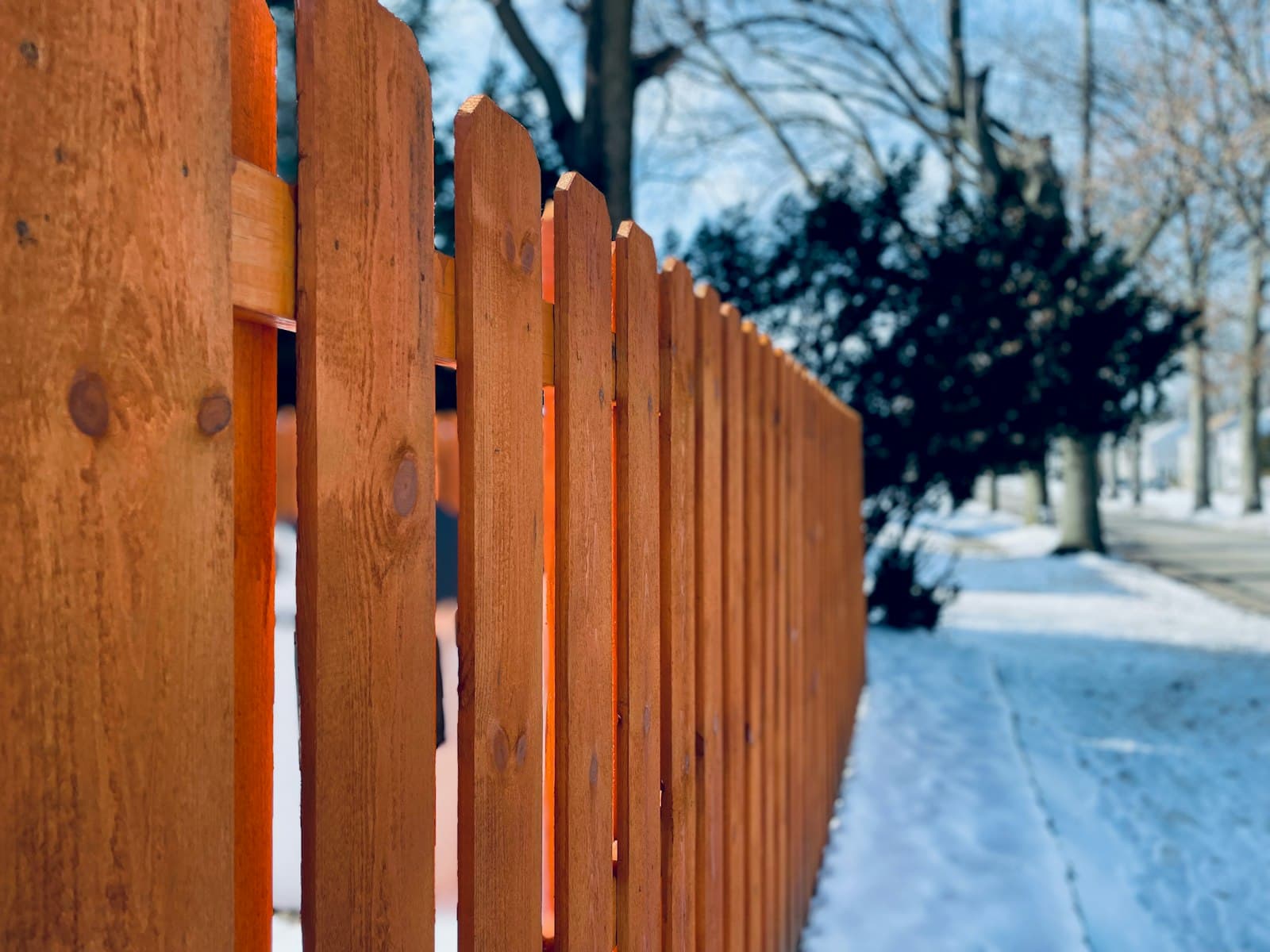
Putting up a fence in Boston sounds simple until you run into the reality: a permit office in a dense neighborhood, a shared property line with a triple-decker next door, and quotes that swing by thousands of dollars for what looks like the same job. This guide walks through what a fence actually costs by material, the Massachusetts rules that govern height and hiring, the steps that keep you out of trouble at the property line, and the red flags that separate honest crews from scammers.
The goal is straightforward: help you spend confidently, stay on the right side of your town's bylaws, and avoid the traps that catch homeowners every year.
What a Fence Costs in Greater Boston by Material and Length
Fence pricing comes down to three things: the material you choose, the length of the run, and the site conditions. In tight Boston yards, that last factor matters more than people expect. Access, slope, and old footings left from a previous fence can all push labor up.
Here is how the common materials generally stack up, from most affordable to most premium:
- Chain link - the budget option, durable and low-maintenance, but offers little privacy.
- Pressure-treated wood - the workhorse for privacy fencing between homes; moderate cost, needs periodic staining or sealing.
- Cedar - a step up from standard wood, more resistant to rot, higher material cost.
- Vinyl (PVC) - higher upfront cost, minimal maintenance, popular for clean privacy panels.
- Aluminum and ornamental steel - premium pricing, often chosen for decorative front-yard borders.
- Composite - typically the top of the range, marketed for longevity and low upkeep.
Length drives the material total, but the setup drives the labor. A 40-foot run along a flat, open side yard is far cheaper per foot than the same 40 feet threaded between two triple-deckers where the crew hauls everything by hand through a narrow gate.
Rather than trust a single number pulled off the internet, run your specifics through a metro-specific tool. Tavlee's Boston fence cost calculator lets you plug in material and length for a local estimate, which gives you a baseline before you start collecting bids.
What Actually Drives Your Price Up
Beyond material and length, watch for these cost multipliers common in Boston:
- Small urban yards with poor access. Hand-carrying posts and concrete adds labor hours.
- Old fence removal and disposal. Tearing out a rotted fence and hauling it off is rarely free.
- Grade changes. Sloped lots require stepped or racked panels.
- Post depth and ledge. Hitting rock or old foundations slows digging.
- Gates and hardware. Each gate adds material and precision labor.
When you compare quotes, make sure every bidder is pricing the same scope. A cheaper number that skips old-fence removal is not actually cheaper.
Massachusetts Rules: Licensing, Registration, and Permits
Here is a point that surprises a lot of homeowners: Massachusetts does not license a "fence trade." There is no state fence-installer license the way there is for electricians or plumbers. The Massachusetts Board of State Examiners of Electricians licenses electricians, and the Board of State Examiners of Plumbers and Gas Fitters covers plumbing and gas work, but fencing is not among those trades.
That does not mean it is a lawless zone. Two things still apply.
Home Improvement Contractor Registration
Massachusetts runs a Home Improvement Contractor (HIC) program through the Office of Consumer Affairs and Business Regulation. The program, governed by MGL c.142A, sets contract requirements, deposit limits, and homeowner protections, including access to a Guaranty Fund. You can read the state's own overview of Massachusetts home improvement law for the specifics.
A firm that only installs fences is generally exempt from HIC registration under the exemptions in MGL c.142A section 14. In practice, though, many fence companies carry HIC registration anyway because they also do broader exterior work - decks, railings, gates tied into structures. Prefer an HIC-registered contractor when you can find one. Registration ties the contractor into the state's dispute process and the Guaranty Fund, which is protection you simply do not get from an unregistered outfit. If a fencing company is registered, that is a point in its favor, not a red flag.
Permits in Boston
Fences frequently need a permit, and in a dense city that is not optional. The City of Boston Inspectional Services Department issues building permits and performs inspections for construction work. Height, location, and neighborhood rules can all trigger a permit requirement, and your specific town or Boston neighborhood may have its own bylaws layered on top.
Confirm the permit situation before any post goes in the ground. A reputable contractor will handle or advise on permitting as a matter of course. One that wants to skip it is a warning sign, which we will get to shortly.
How Tall Can Your Fence Be?
Fence height in Massachusetts is governed at the local level, not by a single statewide number. Individual town and city bylaws set the maximums, and they often differ between front yards and back yards. Front-yard fences are typically held to a lower height to preserve sightlines and street character, while rear and side privacy fences are allowed to be taller - commonly up to 6 feet in side and rear yards, with lower limits out front.
Because the limit lives in your local bylaw:
- Check your town or Boston neighborhood's zoning rules before you buy panels. A 6-foot privacy fence you cannot legally install is an expensive mistake.
- Ask Inspectional Services or your local building department directly when the bylaw language is unclear.
- Get any variance in writing if you are trying to exceed the standard height.
For privacy fencing between triple-deckers, height is exactly the detail people get wrong, so verify it early rather than after the material is delivered.
Property Lines, Neighbors, and Dig Safe
The most contentious part of any fence project is rarely the fence itself. It is the line it sits on.
Know Where Your Line Actually Is
In older Boston neighborhoods, lot lines are not always where fences, hedges, or memory say they are. Before you build:
- Order or locate a current plot plan or survey. Building on the wrong side of the line invites a legal fight and, worst case, a teardown.
- Talk to your abutter early. A party-line fence agreement, where both neighbors agree on placement, style, and any shared cost, prevents disputes and can save both of you money.
- Put shared arrangements in writing. Verbal handshakes over a fence line have a way of unraveling when a house sells.
Call Dig Safe Before You Dig
Digging fence-post holes without checking for buried utilities is dangerous and, in Massachusetts, against the rules. Call 811 before any digging begins - that connects you to Dig Safe, the Massachusetts and New England underground-utility notification program. It is a free service that marks buried gas, electric, and utility lines so the crew does not strike one.
A legitimate contractor treats the Dig Safe call as routine. If a crew shows up ready to dig with no marking done and no mention of it, stop the job.
How to Vet and Compare Fence Quotes
Good hiring is mostly about comparing apples to apples and confirming who you are dealing with. Massachusetts consumer-protection resources make verification straightforward.
Verify credentials against official registries. The state's check a professional license tool and the Division of Occupational Licensure public lookup let you confirm any trade license, and OCABR lets you confirm HIC registration. Verification before payment is the through-line of every consumer-protection agency's advice.
When you collect bids, do this:
- Get at least three written quotes with identical scope: same material, same length, same gate count, same old-fence removal.
- Confirm insurance. Ask for proof of liability coverage in writing.
- Require a signed contract before any work or deposit. Massachusetts home improvement law limits deposits, so be wary of anyone demanding large money up front.
- Check reviews across sources, not just the ones a contractor hands you.
This is where a directory earns its keep. Tavlee's verified Boston fence contractor listings check contractor credentials against official registries and weigh reviews across multiple sources, so you are not doing all the cross-referencing by hand.
Red Flags: Learn From a Real Massachusetts Scam
A recent case out of Monson shows how fast a contractor scam can turn destructive. As Roofing Contractor reported in July 2026, a man claiming to be a mason approached a Monson homeowner right after another crew had finished siding work, insisted the chimney was at risk of collapse, and offered to start repairs on the spot for $25,000. He began swinging a sledgehammer before any permit was pulled - and by the time the homeowner stopped the work, the chimney was destroyed and the new siding and part of the roof were damaged. The trade was different, but the scam pattern is identical to the ones that hit fence buyers.
Watch for these warning signs:
- Unsolicited arrival, especially right after another crew finished a nearby job.
- Urgent failure claims designed to panic you ("your fence posts are about to fall").
- Pressure for immediate payment or a signature before you can think.
- Work starting with no signed contract, no permit, and no deposit terms.
- Refusal or inability to provide registration and insurance documentation.
The lesson lines up with the state's own advice: verify credentials through OCABR and never allow work to start without a signed contract. That is not paranoia. It is the cheapest insurance you can buy on a fence project.
Key Takeaways and Next Steps
Hiring a fence contractor in Boston comes down to a short, repeatable checklist:
- Price by material and length, and make every quote cover identical scope.
- Understand the rules: no state fence license exists, fencing-only firms are often HIC-exempt, but favor HIC-registered contractors for the added protections.
- Check your local height bylaw and permit requirements before buying material.
- Nail down the property line, talk to your abutter, and call Dig Safe (811) before digging.
- Verify credentials, insist on a written contract, and trust the red flags over a smooth sales pitch.
Start by pricing your project on the Boston fence cost calculator, then shortlist verified fence contractors and get your three quotes in writing.