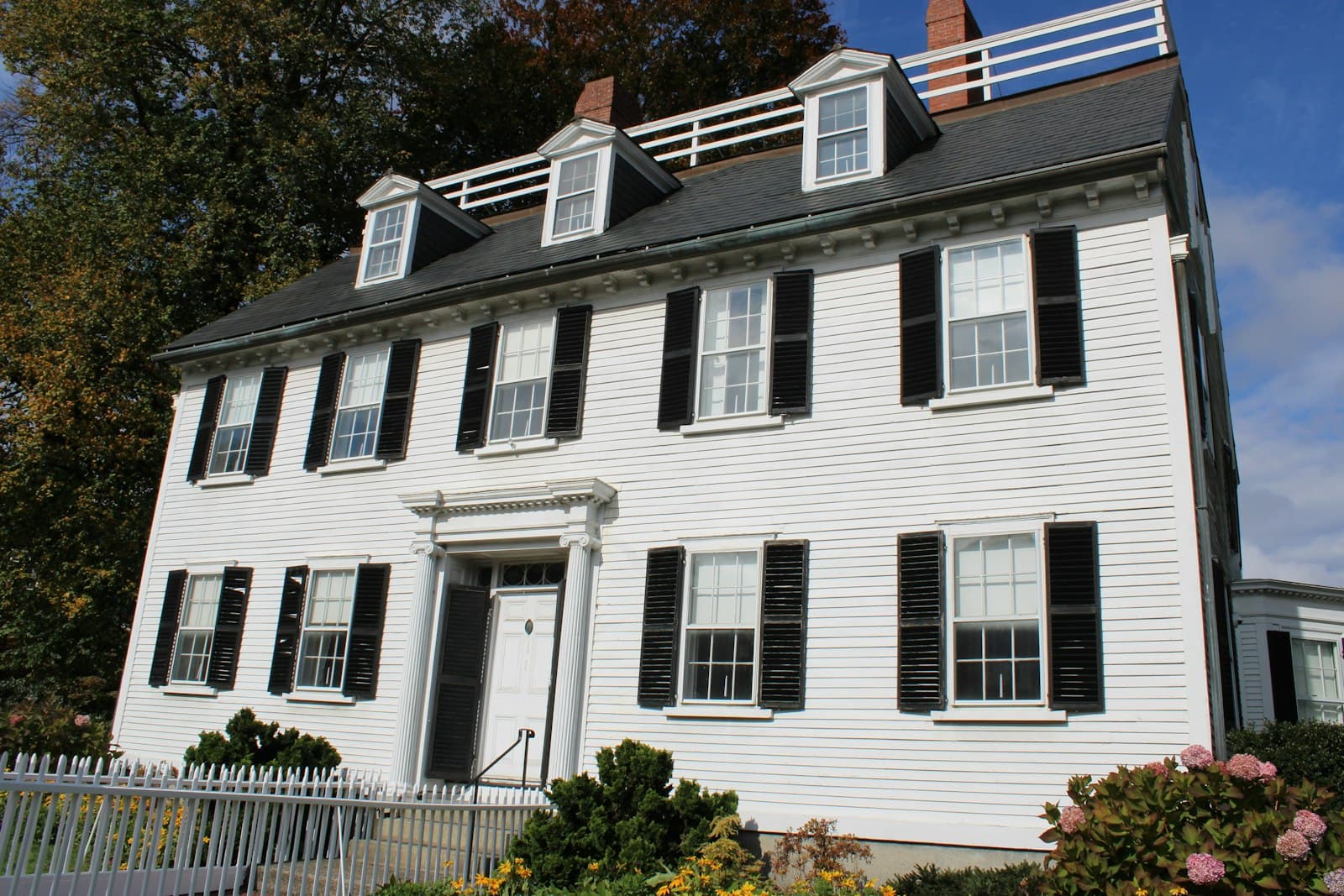
Hiring someone to touch the windows, siding, or gutters on a North Shore home is not like hiring for an inland project. Salt spray, coastal wind, and centuries-old housing stock in Salem, Marblehead, Newburyport, and Gloucester all change what you can install, who you can hire, and how much it costs.
This guide walks through the coastal wear factors, the historic-district approval reality, the Massachusetts rules that protect you, and the red flags that separate legitimate contractors from opportunists. The goal is simple: help you compare quotes with confidence and avoid the costly mistakes that hit coastal homeowners hardest.
What windows, siding, and gutters cost on the North Shore
Exterior work near the ocean tends to run higher than inland pricing, and the reasons are physical, not arbitrary. Coastal projects demand corrosion-resistant fasteners, wind-rated products, and detailing that inland jobs skip.
Several factors drive North Shore pricing up:
- Salt spray and wind exposure. Salt air corrodes ordinary fasteners and chews through paint and finishes faster than inland conditions, so contractors specify stainless or coated hardware and more durable coatings.
- Cedar versus modern materials. Cedar shingle and clapboard carry a premium over vinyl or fiber cement, both in material and in the skilled labor to install and maintain them.
- Historic-district product constraints. When a local commission requires wood windows or restoration over replacement, your material choices narrow and your price climbs.
- Wind ratings and coastal fastening. Proper wind-rated installation and salt-air detailing add labor and specialized product costs.
Because pricing swings so much by material and exposure, get itemized quotes rather than a single lump sum. To ground your expectations before you call anyone, the live cost calculator on Tavlee gives a metro-area baseline you can adjust for coastal conditions, and you can browse verified North Shore exterior contractor listings that are checked against the state registries.
The historic-district reality in Salem, Marblehead, Newburyport, and Gloucester
If your home sits in a local historic district, the biggest constraint on your window project may not be your budget. It may be your local historic commission.
These commissions often weigh in on visible exterior changes, and windows are among the most scrutinized. Many favor sash restoration over full replacement, and several are cautious about swapping original wood windows for vinyl.
Check with your local historic district commission before you order anything. A custom window order is expensive and often non-refundable, and you do not want to discover the commission wants restoration after the glass is already on a truck.
The cedar shingle and clapboard traditions in Marblehead, Gloucester, and Newburyport run deep, and commissions frequently want new work to respect those materials. That can mean:
- Restoring existing sash rather than replacing whole units
- Matching profiles, muntin patterns, and sightlines on any replacement
- Choosing wood or historically accurate products over modern vinyl
Approval processes and standards vary town to town, so contact your own commission directly. Build the approval timeline into your project schedule before you sign anything.
Sash restoration vs. insert vs. full-frame replacement
There are three broad paths for an aging window, and the right one depends on your home's condition, your district's rules, and your budget.
- Sash restoration. Repair and reglaze the existing sash, restore the weight-and-pulley operation, and add weatherstripping. This preserves original material, is often the historic-commission-preferred route, and can be surprisingly efficient on well-built old windows.
- Insert replacement. A new window fits inside the existing frame. It keeps the exterior trim and is less invasive, but it slightly reduces glass area and does not address rot in the surrounding frame.
- Full-frame replacement. The entire unit, including the frame, comes out. This is the right call when there is structural rot, but it is the most invasive and often the least likely to win historic-district approval without careful matching.
When you compare quotes, make sure each contractor is bidding the same approach. A restoration quote and a full-frame quote are not comparable numbers.
How coastal salt and wind wear down siding and gutters
The ocean is relentless on exteriors. Salt spray and coastal wind accelerate wear on siding, gutters, and especially the fasteners holding everything together.
On siding, salt air degrades finishes and corrodes nails and staples. Cedar shingles and clapboards, the traditional North Shore choice, weather beautifully but need maintenance and quality fasteners to reach their full lifespan near the water.
Gutters take a beating too. Corroded fasteners loosen gutters, and clogged or poorly pitched systems contribute to ice dams in winter. When you interview contractors, ask specifically about:
- Corrosion-resistant fasteners rated for coastal exposure
- Salt-air detailing and back-priming on cedar
- Wind ratings appropriate to your exposure
- Experience with cedar and older coastal homes, not just vinyl on newer construction
A contractor who talks fluently about salt-air detailing and coastal fastening is telling you they have done this work near the water before.
Massachusetts rules every North Shore homeowner should know
Massachusetts gives homeowners real protections, but only if you use them. Start with registration and licensing before a single conversation about price.
HIC registration and the CSL for structural work
Most exterior residential work requires the contractor to hold a Home Improvement Contractor (HIC) registration, administered through the Massachusetts Office of Consumer Affairs and Business Regulation. The official overview of Massachusetts home-improvement law under MGL c.142A lays out registration, contract requirements, and the Guaranty Fund that can help homeowners recover losses.
Structural work, such as repairing rotted framing behind siding or around windows, generally involves a Construction Supervisor License (CSL) in addition to HIC registration. You can confirm any credential using the state's check a professional license tool before you hire.
EPA lead-safe rules on pre-1978 homes
Much of the North Shore's historic-district housing predates 1978, which triggers the EPA Lead Renovation, Repair and Painting (RRP) requirements. Contractors disturbing paint on pre-1978 homes must follow lead-safe work practices. Given the age of homes in Salem, Marblehead, Newburyport, and Gloucester, most district properties qualify, so ask any window or siding contractor how they handle lead-safe work.
The custom-window deposit exception, explained honestly
Here is a rule that confuses a lot of homeowners. Under MGL c.142A, deposits are generally capped at one-third of the contract price. But there is a legitimate exception for special-order materials, and custom or historically accurate windows are a classic example.
Because a manufacturer will not build a bespoke wood window without payment, the deposit can legitimately cover those special-order materials above the one-third cap. That is legal and normal. The protection for you is documentation:
- Get the special-order items itemized in the written contract.
- Make sure the contract explains why the deposit exceeds one-third.
- Keep everything in writing before you pay.
A contractor asking for a large deposit is not automatically a problem if the money maps to a documented custom order. A contractor asking for a large deposit with no itemization is a different story.
Red flags: how coastal homeowners get scammed
Storm-chasers and pressure-sales operators target exactly the conditions the North Shore produces: wind damage, aging exteriors, and homeowners eager to fix problems fast. A recent Massachusetts case shows how quickly it can go wrong.
As reported by Roofing Contractor, a Monson homeowner was targeted right after a legitimate siding installation: a man claiming to be a mason insisted the chimney was about to collapse and pressed for $25,000 in immediate repairs. A sledgehammer was swinging before any permit was pulled or contract signed, and by the time the homeowner intervened, the chimney was destroyed and the brand-new siding damaged. The original siding crew recognized the tactic, urged the homeowner to contact authorities, and the individuals were reportedly taken into custody.
The warning signs map directly onto what North Shore homeowners face:
- Unsolicited arrival, often right after another crew's job
- Pressure for immediate payment or a signature
- Work starting without a signed contract or before a permit
- Refusal or inability to provide registration and insurance
- Urgent failure claims designed to rush your decision
The advice is exactly right: verify registration with the Office of Consumer Affairs and Business Regulation, and never let work begin without a signed contract. Directories that verify registrations against the Massachusetts registries and weigh reviews across sources, like Tavlee, give you a screened starting point instead of a cold call from a stranger in your driveway.
How to vet and compare quotes
Bring the same discipline to every bid. A good comparison process protects you far more than the lowest number.
- Confirm registration and licensing through the state license lookup before the estimate.
- Match the scope. Restoration, insert, and full-frame quotes should be compared like for like.
- Ask about coastal experience. Wind ratings, salt-air detailing, corrosion-resistant fasteners, and cedar work matter here.
- Read the warranty terms on both materials and labor.
- Insist on a written contract with itemized special-order deposits.
- Verify historic-commission approval is part of the plan if you are in a district.
Key takeaways
Coastal conditions and historic rules make North Shore exterior projects unique, but the path to a good outcome is straightforward.
- Check with your local historic commission before ordering windows, and expect a preference for sash restoration.
- Verify HIC registration and any required CSL through Mass.gov before hiring.
- Understand that a large deposit for custom windows can be legitimate when itemized in writing.
- Treat unsolicited, high-pressure pitches as the warning sign the Monson case proved them to be.
Start with verified listings and a realistic cost baseline, contact your historic commission early, and get everything in writing. That combination keeps your project on schedule and your money protected.